
Project #10
OBSTACLE AVOIDING ROBOT
This is an autonomous robot built as the first project for the 25/26 session for the GDG Robotics & Embedded Systems Track - Covenant University. Using an ultrasonic sensor mounted on a servo motor, the robot the robot scans the left, forward and right direction and determines the freest path. It drives in that direction for 2 seconds before stopping to re-evaluate.
Despite limited components at the time, the team assembled a fully functional prototype during a study jam session.
Technical Breakdown

Schematic Diagram
Components Used:
1. Arduino UNO Board
2. HCSR-04 Ultrasonic Sensor
3. L298N Motor Driver
4. DC Motor x2
5. SG90 Servo
6. 5V 3A Power Supply Module
Link to GitHub Repo: Obstacle-Avoiding Car
Key Features
1. Dynamic Scanning with Ultrasonic Sensor
The robot uses an ultrasonic sensor mounted on a servo motor to sweep left, forward, and right directions. This allows it to actively scan its environment and detect obstacles in multiple directions before choosing a movement path.
2. Intelligent Path Selection Algorithm
After collecting distance data in all three directions, the robot automatically selects the direction with the most free space. This ensures efficient navigation and reduces the chances of collision in tight environments.
3. Autonomous Reevaluation Cycle
The vehicle moves in the chosen direction for two seconds, then stops to re-scan and update its decisions. This creates a continuous feedback loop, enabling adaptive behavior as the environment changes.
4. Automatic Reverse Manouever for Dead Ends
If all measured distances fall below a set threshold, the robot initiates a reverse sequence to escape the dead zone. After reversing, it performs a fresh scan to determine a new path forward.
Demonstration Video
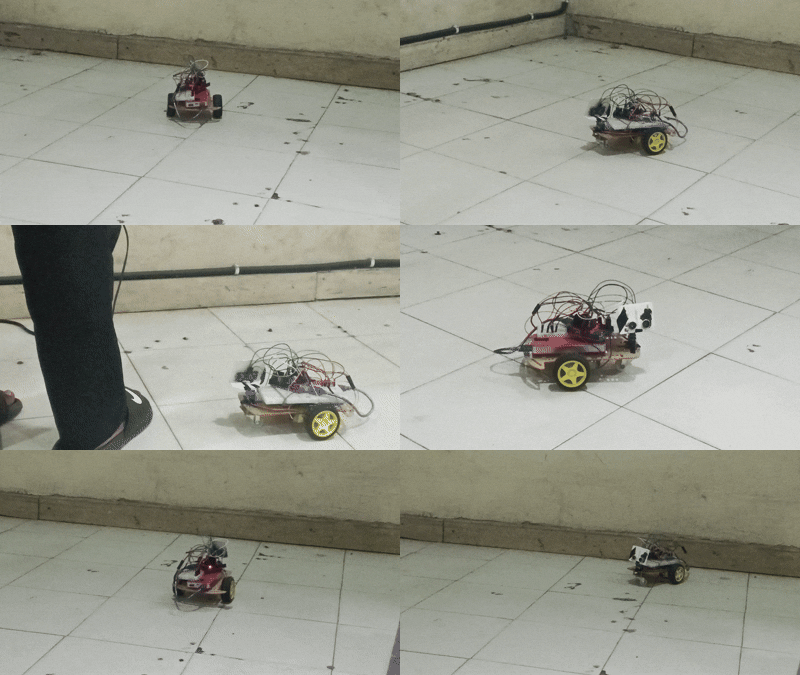
Demonstrating the Obstacle-Avoiding Bot in Action
Notes
This project marked an exciting beginning to my new role as Co-Lead of the Robotics Track for the GDG on Campus team. After weeks of planning with the lead, we chose this obstacle-avoiding robot as our first project for the 2025/2026 session because of its simplicity and its value as an entry point into robotics. It gave beginners a hands-on introduction to core concepts such as Arduino programming, C++, servo control, ultrasonic sensing, and hardware connections.
Throughout our sessions, we broke into small groups so everyone could interact with the components directly, experimenting with sensors, servos, and wiring in a practical, engaging way. While awaiting approval for our proposed component list and budget, one team member brought in a spare chassis—so we decided to build a minimum working prototype during our last meeting before the break. After about an hour of assembly and nearly forty-five minutes of debugging, we got the robot functioning exactly as intended, which was a genuinely rewarding moment for the whole team.
The robot’s behavior loop is straightforward but effective: it moves forward for about two seconds, stops to take three distance readings (left, forward, and right), compares them, and selects the safest direction to continue. If all distances fall below the threshold, it executes a reverse maneuver before reevaluating. This cycle repeats indefinitely, giving the robot a basic but reliable form of autonomous navigation.
Once the official components arrive, we may rebuild a more polished version—or move on to more advanced robotics projects for the track. Some potential future improvements include adding a Bluetooth override mode, integrating IR edge-detection sensors, upgrading from a prototype chassis to a full kit, and implementing PID-based turning for smoother maneuvers.
Overall, the project served exactly its purpose: a simple, hands-on introduction to robotics that brought the team together, sparked curiosity, and set the tone for the projects we’ll build in the months ahead.
